
Impact
Kikulu Foundation Ltd.
Kikulu Foundation Ltd.
Report on Primary School Headteachers’ ICT Capacity Building Workshops
Reporting Period: 12–24 June 2026
Project: Digital Literacy and ICT Capacity Building for Primary School Leaders
Prepared by: Kikulu Foundation Ltd.
Executive Summary
Kikulu Foundation Ltd. successfully conducted the first phase of its Primary School Headteachers’ ICT Capacity Building Programme across Luweero District. The initiative aims to equip school leaders with practical digital skills that improve school administration, financial management, communication, record keeping, teaching and learning using readily available technologies, particularly smartphones.
Four regional workshops were conducted during June 2026, reaching Headteachers from different parts of the district. Despite the common challenges of limited ICT infrastructure, low digital literacy, transport costs and long travel distances, the response from participants was overwhelmingly positive. School leaders demonstrated a strong willingness to adopt digital tools and requested continued training to deepen their skills.
The workshops have established a strong foundation for expanding digital literacy among primary schools and provide clear evidence that investment in school leadership training can accelerate digital transformation in Uganda’s education sector.
Headteachers’ Workshop 1
Luweero Boys Primary School
Date: 12 June 2026
The inaugural ICT workshop was held at Luweero Boys Primary School and targeted Headteachers from Luweero Town Council, Kasiiso and Nalongo Trading Centre.
- Headteachers invited: 20
- Headteachers attended: 14
- Attendance rate: 70%

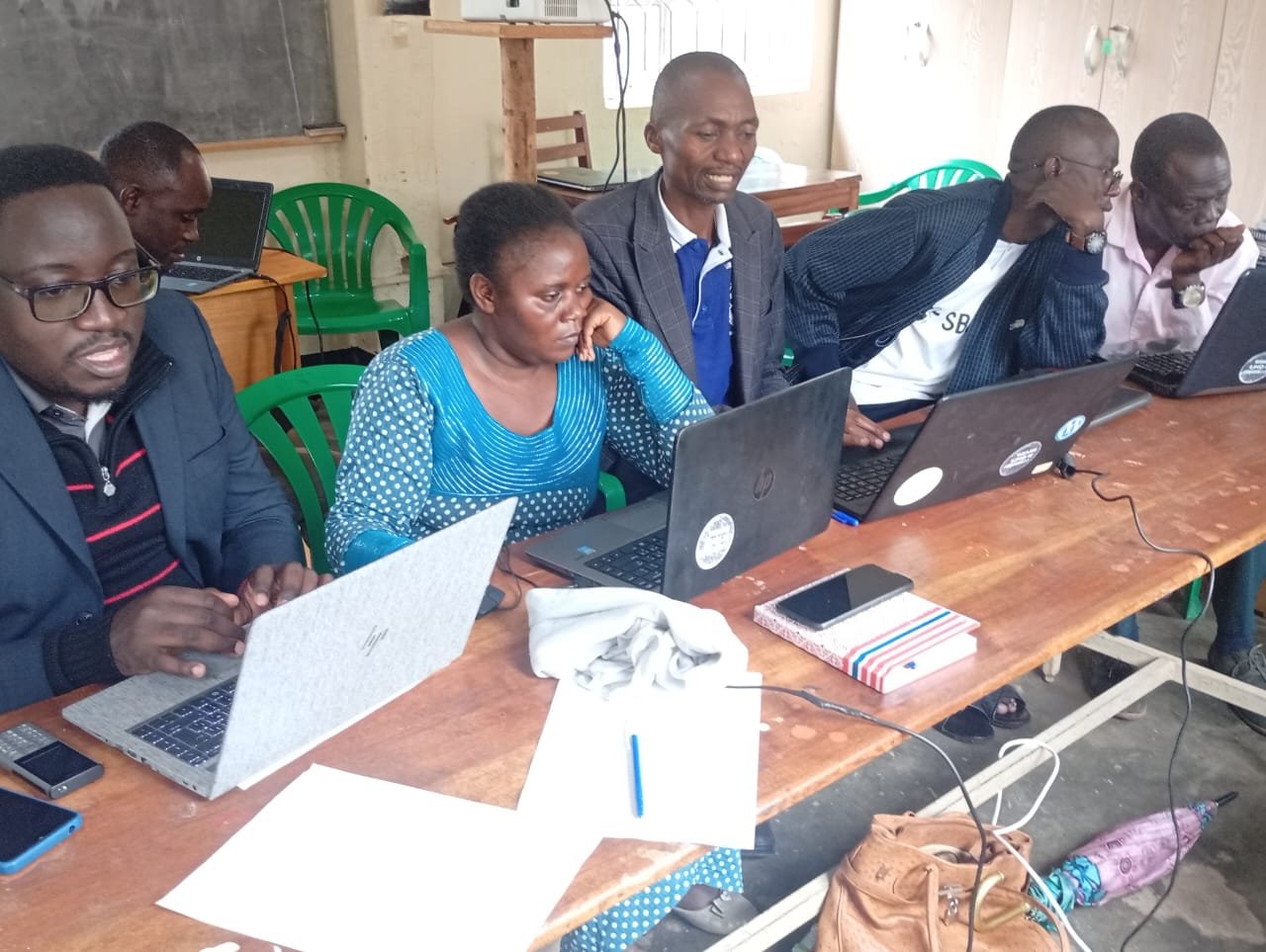
Figure 1:Some of the Headteachers at Luwero Boys Primary School
Participants expressed great appreciation for the practical nature of the training. Many acknowledged that they had previously viewed ICT as something only possible through expensive computer laboratories. The workshop demonstrated how smartphones can become powerful tools for school management and communication.
As evidence of participant satisfaction, every Headteacher committed to returning for future sessions and pledged to invite at least one additional teacher from his or her school.
To respond to this growing demand, Kikulu Foundation plans to increase the next cohort at this centre to approximately 40 participants.
Headteachers’ Workshop 2
Zirobwe C/U Primary School
Date: 17 June 2026
The second workshop was conducted at Zirobwe C/U Primary School, serving school leaders from Kalere, Mpigi, Koziba and Zirobwe Town Council.
- Headteachers invited: 20
- Headteachers attended: 11
- Attendance rate: 55%
Figure 2:Some of the Headteachers at Zirobwe Primary school posing with their Smartphones for a photo
Participants recognized the importance of digital skills for modern school leadership and strongly recommended that the programme be extended beyond introductory sessions. Many observed that sustained mentoring and follow-up training would be necessary to achieve meaningful digital transformation within their schools.
Participants committed themselves to mobilizing additional Headteachers and teachers for future training. Based on this positive response, Kikulu Foundation plans to increase participation at the next workshop to 30 school leaders.
Headteachers’ Workshop 3
Wobulenzi Public Primary School
Date: 19 June 2026
The third workshop was held at Wobulenzi Public Primary School and attracted school leaders from Lukomera, Sempa, Sekamuli, Luteete and Nsawo.
- Headteachers invited: 20
- Headteachers attended: 12
- Attendance rate: 60%
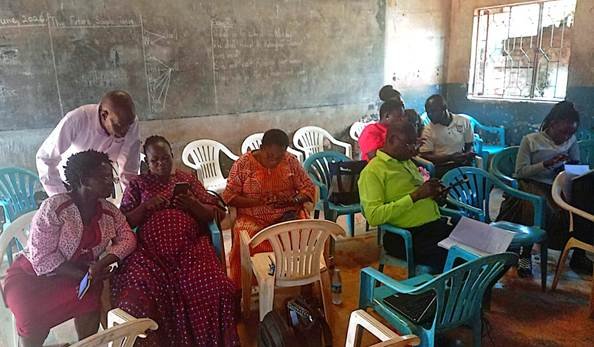
Figure 3: Some Headteachers actively incolved in using smartphones to manage school finances with Google Sheets.
At the beginning of the workshop, many participants expressed concern that they lacked computers, electricity and ICT infrastructure in their schools. These challenges had discouraged them from attempting to integrate technology into school management.
The training deliberately addressed these concerns by focusing on practical smartphone-based solutions. Participants learned how to use smartphones for:
- School administration
- Financial record management
- Academic record keeping
- Communication with parents and stakeholders
- Teaching and learning support
- Accessing educational resources
By the end of the workshop, participants reported a significant shift in mindset. They appreciated that meaningful digital transformation can begin immediately using devices they already own, even in schools with limited infrastructure.
Headteachers’ Workshop 4
Namaliga Primary School
Date: 24 June 2026
The fourth workshop was hosted by Namaliga Primary School and targeted Headteachers from Bbowa, Ndejje, Kalasa and Bombo Town Council.
- Headteachers invited: 20
- Headteachers attended: 13
- Attendance rate: 65%
Participants highlighted the long distances travelled to reach the training venue and recommended establishing additional training centres closer to their communities. They also expressed strong appreciation for the relevance and practicality of the training.
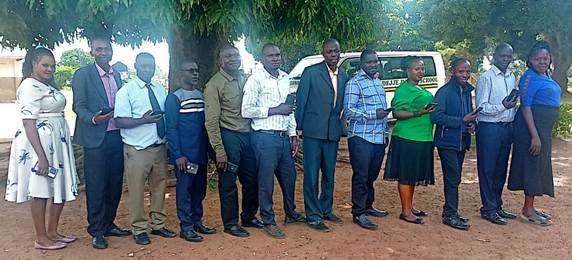
Figure 4: Headteachers at Namaliga Primary School posing with their Smartphones for a photo after lunch
Every participating Headteacher committed to returning with at least one fellow Headteacher and one classroom teacher who would serve as the ICT or Digital Literacy focal person within their school.
Overall Results
During this first phase:
- 4 regional workshops were successfully conducted.
- 80 Headteachers were invited
- 50 Headteachers attended.
- Overall participation rate was 62.5%.
Table 1 This table includes number of Headteachers invited and those who actually attended:
| Date | Training point/Station | Invited | Attended |
| 12/06/2026 | Luweero Boys Primary School | 20 | 14 |
| 17/06/2026 | Zirobwe C/U Primary School | 20 | 11 |
| 19/06/2026 | Wobulenzi Public Primary School | 20 | 12 |
| 24/06/2026 | Namaliga C/U Primary School | 20 | 13 |
| Total number invited | 80 | 50 | |
The programme demonstrated strong demand for practical ICT training among school leaders. Participant feedback consistently indicated that the training addressed real challenges faced in school administration and inspired confidence in using digital technologies.
Key Achievements
The programme has already begun creating measurable impact by:
- Improving digital confidence among participating Headteachers.
- Demonstrating affordable smartphone-based solutions for school management.
- Encouraging peer-to-peer learning through participant commitments to mobilize colleagues.
- Creating a growing network of digitally empowered school leaders.
- Increasing awareness that digital transformation is achievable even in low-resource schools.
- Strengthening collaboration between schools and Kikulu Foundation.
Challenges Identified
Although the programme was successful, several challenges continue to limit wider participation:
- Limited access to computers and ICT equipment in many schools.
- Lack of reliable electricity in some rural communities.
- High transport costs for participants travelling long distances.
- Limited internet connectivity in certain locations.
- Insufficient training venues to adequately serve all target communities.
- Limited funding to provide follow-up mentorship, training materials and practical demonstrations.
These challenges highlight the need for continued investment to ensure that rural schools are not left behind in Uganda’s digital transformation agenda.
Lessons Learned
Several important lessons emerged from the workshops:
- Smartphones provide a practical and affordable entry point for digital transformation in primary schools.
- School leaders are highly motivated to adopt ICT when training is practical and directly linked to their daily responsibilities.
- Demand for continuous professional development in digital literacy is much greater than initially anticipated.
- Decentralized community-based training significantly increases participation.
Future Plans
Building on the success of the first phase, Kikulu Foundation intends to:
- Expand training centres from 4 to 10 by the beginning of Term III.
- Train at least 500 teachers, including Headteachers, before the end of 2026.
- Establish ICT focal teachers in participating schools.
- Introduce advanced ICT workshops and mentoring programmes.
- Develop a sustainable network of digitally enabled primary schools across Luweero District.
- Start training to primary school pupils and youths.
Funding Opportunity
The success of pilot Digital Literacy workshops demonstrates that relatively modest investments can produce significant improvements in digital leadership within primary schools. Additional funding will enable Kikulu Foundation to expand training locations, procure training equipment, provide learning materials, strengthen follow-up support and reach thousands more educators across underserved communities.
Together with partners and donors, Kikulu Foundation seeks to ensure that every primary school leader has the digital skills required to improve education outcomes and prepare learners for an increasingly technology-driven world.

Stumbled upon this site last weekend and decided to give it a try and I am so glad I did. The welcome bonus matched my first deposit perfectly and the game library keeps growing every month. It feels like a trustworthy buddy that always shows up when you need a break. gamericwin